

Summary
Additive manufacturing is rapidly transforming Australia’s manufacturing landscape by enabling faster, more flexible, and cost-efficient production. Once used mainly for rapid prototyping, industrial 3D printing is now widely adopted for producing functional prototypes, tooling, spare parts, and production-ready components.
Technologies such as FDM, SLA, SLS, and metal 3D printing allow manufacturers to reduce tooling costs, shorten product development cycles, and strengthen supply chain resilience through local, on-demand production. Industries including mining, automotive, medical devices, construction, and aerospace are increasingly integrating additive manufacturing into their operations. With over 15 years of experience, companies like Forge Labs provide engineering-led industrial 3D printing services that help manufacturers move efficiently from concept to full production.
Key Takeaways
• Additive manufacturing is becoming a core production strategy for Australian manufacturers.
• 3D printing eliminates expensive tooling and enables cost-effective low-volume manufacturing.
• Industrial technologies like FDM, SLA, SLS, and metal printing allow production-ready components.
• Manufacturers can reduce supply chain risks through local, on-demand production.
• Rapid prototyping accelerates product development and innovation cycles.
• Industries such as mining, automotive, medical devices, and construction benefit significantly from additive manufacturing.
• Engineering expertise and design optimisation are essential for successful 3D printing adoption.
• Companies like Forge Labs provide end-to-end industrial 3D printing services for manufacturers across Australia.
Introduction
The Australian manufacturing industry is constantly changing day by day and transforming as additive manufacturing becomes popular quickly in many years across multiple sectors. In the coming decade it is projected that we will see a significant expansion in the 3d printing market as manufacturers are adopting quicker, more flexible, and cost-efficient production technologies.
The old traditional methods often take a long lead time, its tools are expensive and have complicated supply chains. Additive manufacturing is different; it helps manufacturers to produce parts directly through digital designs, enabling faster innovations and great design flexibility. Additive manufacturing was once stated as a faster mode of prototyping for businesses/manufacturers but now it is become a powerful tool for production used for manufacturing functional components, tooling and ready to use parts
Klaus Schwab (World Economic Forum)
Klaus Schwab, Founder of the World Economic Forum, has highlighted that advanced manufacturing technologies like 3D printing are transforming global production by enabling decentralised manufacturing, faster innovation cycles, and more resilient supply chains.
Australian manufacturers are now rapidly adopting this method for 3d industrial printing to meet daily requirements of clients and several critical challenges. Nowadays, companies have to move for more agile manufacturing methods because of global supply chain disruptions, rising tooling costs and the need for faster production are the reasons. To reduce the dependency on overseas manufacturing and improving supply chains resistance there is a need for local production capabilities
The Current State of 3D Printing in Australia
It is seen that there is a massive growth in additive manufacturing in Australia in the recent decade. Business is also investing in the digital methods of production technologies that enables faster product development and local manufacturing as a part of advanced manufacturing australia.
Nowadays, industrial 3d printing australia solutions are adopted and integrated in their operations by several industries across the country. While this technology was mainly used for rapid prototyping Australia previously is now gradually used for low-volume production, spare parts, and functional components.
Some of the leading industries are in this transition:
-
Mining
-
Automotive
-
Medical devices
-
Construction
-
Aerospace
-
Product development
Additive manufacturing used for wide range of application by manufacturers, including:
-
Functional prototypes
-
Manufacturing tooling
-
Replacement spare parts
-
Production components
This transition shows the growing importance of additive manufacturing Australia as a key driver of innovation and production efficiency.
Why Manufacturers in Australia Are Turning to 3D Printing
The main reason for adopting additive manufacturing by manufacturers is that it helps in several key challenges that are associated with traditional production methods.
Some of the reasons are listed below :
High Tooling Costs in Traditional Manufacturing
Due to the requirement of high tooling, traditional processes like injection molding and CNC machines require huge investment. Tens of thousands of dollars can cost in injection molds and complex programming & tooling preparation in CNC machines setups requires high cost.
For low-volume production businesses or custom components, a huge financial risk comes due to high costing for these processes. This is where the additive manufacturing becomes highly valuable.
With low-volume manufacturing Australia solutions powered by 3D printing, manufacturers can produce parts without investing in expensive molds or tooling. This approach is ideal for:
-
Custom manufacturing Australia
-
Product validation
-
The Bridge manufacturing between prototype and mass production
This result in lower production costs and increase in speed of launching products for companies.
Supply Chain Disruptions
In recent years, there are major disruptions faced by global supply chains due to shipping delays, geopolitical issues, and manufacturing shutdowns. A massive spare parts shortage and expanded production delays have been faced by many Australian companies.
Additive manufacturing offers practical solutions like on-demand manufacturing Australia. So, manufacturers only need to maintain the digital inventory manufacturing systems where parts are produced only when needed instead of storing large inventories.
Improvement of supply chain resilience and strengthening of local manufacturing Australia can be done by this model enabling companies to produce critical components domestically.
Faster Product Development
In this modern era, speed is the main aim for companies. They focus on developing and launch products faster than ever to stay competitive in market
3D printing enables rapid prototyping for manufacturers, and engineers can test and refine designs quickly. This eliminates for waiting of weeks for machine prototypes, now prototypes can be made made in hours or days
Benefits include:
-
Faster product iteration
-
Reduced development costs
-
Shorter time to market
Manufacturers are enabled to perform design testing, engineering validation, and functional prototype development more efficiently, pacing the entire innovation cycle
Key Technologies Driving the Future of 3D Printing in Australia
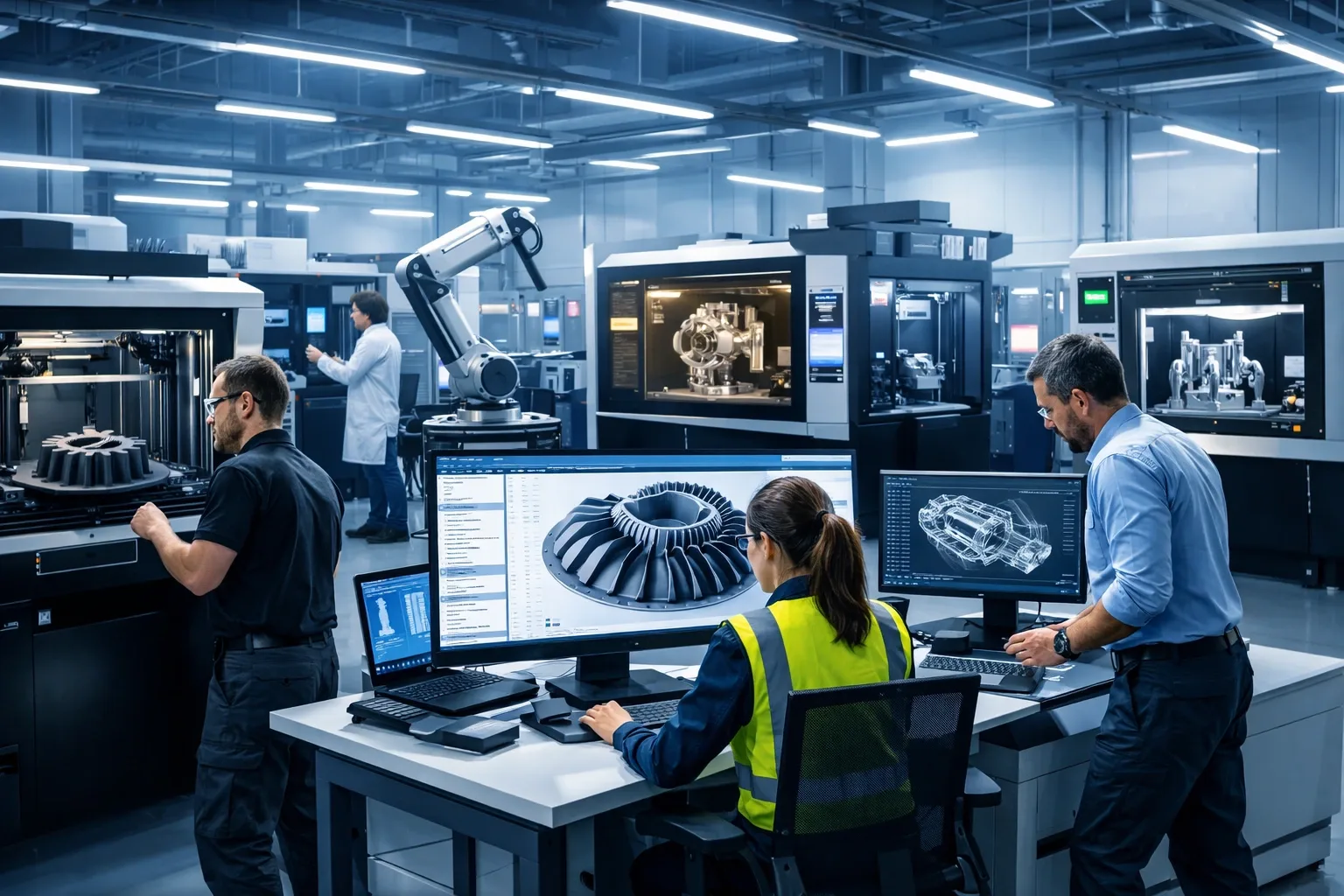
Several additive manufacturing technologies are driving industrial adoption across Australian industries.
FDM Manufacturing
FDM manufacturing Australia (Fused Deposition Modeling) is one of the most widely used industrial 3D printing technologies. It is particularly effective for producing durable parts using engineering-grade thermoplastics.
Common applications include:
-
Manufacturing jigs and fixtures
-
Production tooling
-
Functional prototypes
FDM is valued for its reliability, material strength, and cost-effectiveness in industrial environments.
SLA for Precision Parts
Stereolithography (SLA) is known for producing highly detailed and precise components with smooth surface finishes.
SLA printing Australia is commonly used for:
-
Product validation
-
High-precision prototypes
-
Complex design models
This technology is ideal when dimensional accuracy and visual quality are critical.
SLS for Production-Ready Nylon Parts
Selective Laser Sintering (SLS) is widely used for producing durable nylon components without support structures.
Industrial SLS printing Australia allows manufacturers to produce batch quantities of functional parts using nylon SLS printing, making it suitable for low-volume production.
SLS parts are often used for:
-
Mechanical housings
-
Snap-fit components
-
Durable production parts
Metal 3D Printing for Industrial Manufacturing
Metal additive manufacturing is expanding rapidly in Australia, enabling the production of complex industrial components that were previously difficult or impossible to manufacture.
Metal 3D printing Australia is used for:
-
Heat-resistant components
-
Custom metal brackets
-
Complex machine parts
Industries such as aerospace, automotive, and heavy machinery are increasingly adopting this technology.
Industries That Will Benefit Most from 3D Printing in Australia
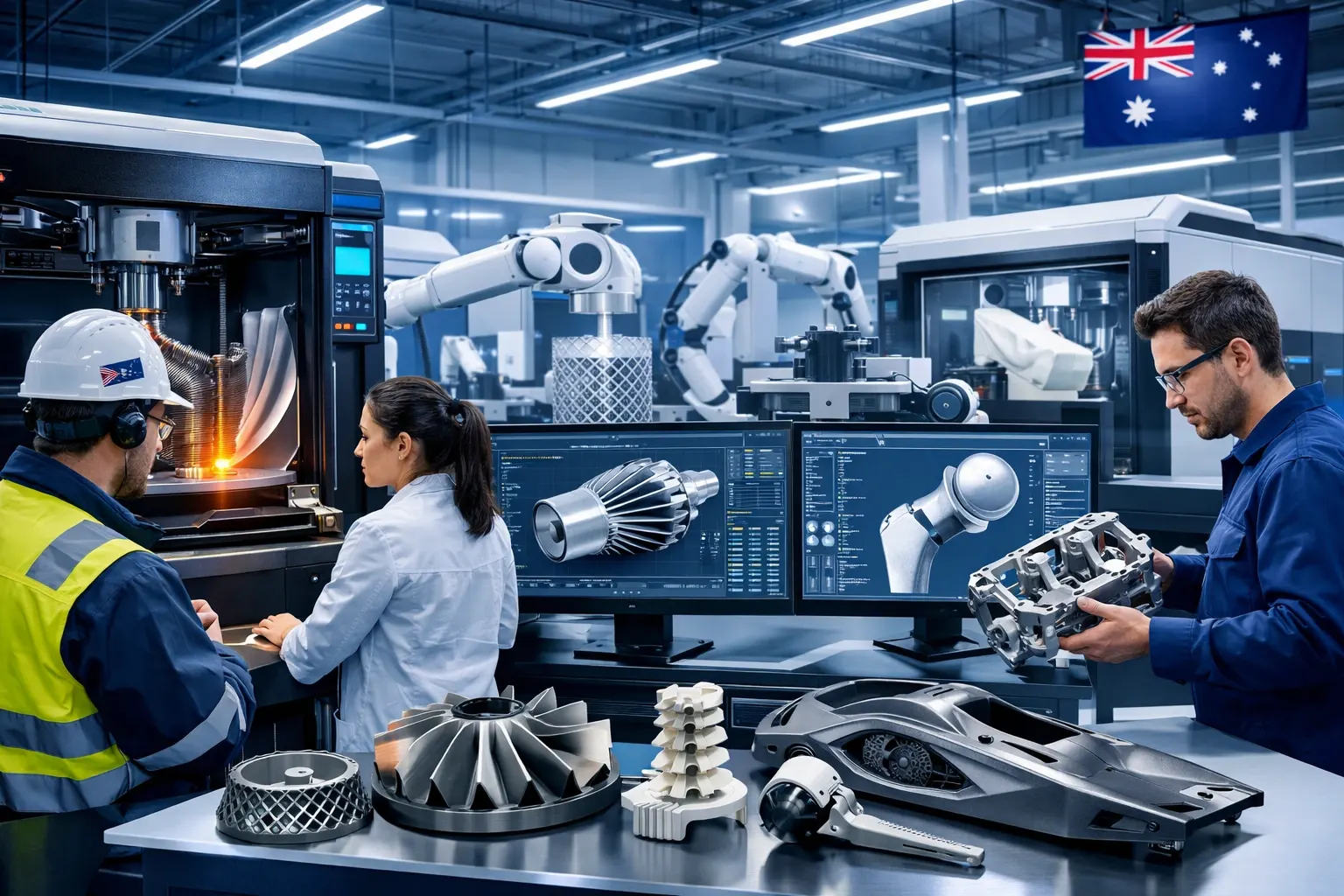
Several industries are expected to benefit significantly from additive manufacturing.
Mining Industry
Australia’s mining sector relies heavily on equipment that must operate in extreme environments. When parts fail, downtime can be extremely costly.
Using mining spare parts 3D printing, companies can quickly produce replacement components such as:
-
Machine brackets
-
Protective housings
-
Custom repair parts
This reduces downtime and improves operational efficiency.
Medical Manufacturing
The healthcare sector is increasingly using additive manufacturing for specialized applications.
Medical device manufacturing Australia includes:
-
Surgical guides
-
Medical prototypes
-
Custom implants
3D printing enables highly customized medical solutions tailored to individual patients.
Construction and Infrastructure
The construction industry is exploring construction 3D printing Australia for innovative building techniques and custom structural components.
Applications include:
-
3D printed building components
-
Architectural models
-
Custom infrastructure parts
Automotive and Machinery
The automotive sector is adopting automotive additive manufacturing for design validation and production tooling.
Applications include:
-
Custom brackets
-
Protective housings
-
Production tools
3D printing reduces development time and supports rapid innovation in automotive engineering.
3D Printing vs Traditional Manufacturing
When comparing additive manufacturing to traditional manufacturing, several key differences emerge.
Cost
Traditional manufacturing requires expensive molds and tooling. 3D printing eliminates these upfront costs, enabling manufacturing cost reduction for low-volume production.
Production Speed
3D printing enables faster prototyping and small-batch production, improving production efficiency.
Flexibility
Additive manufacturing allows complex geometries and rapid design changes without tooling modifications.
However, traditional manufacturing methods such as injection molding remain more cost-effective for high-volume mass production.
As a result, additive manufacturing works best as part of a broader industrial production solutions strategy.
Major Challenges Slowing 3D Printing Adoption in Australia
Despite its benefits, additive manufacturing adoption still faces several challenges.
Material Limitations
Certain industrial applications require materials with extremely high mechanical performance, heat resistance, or durability. While material options continue to expand, some industries still face limitations.
Engineering Expertise
Successful adoption requires expertise in design for additive manufacturing (DFAM). Engineers must understand how to optimize designs specifically for 3D printing.
Without proper engineering validation, parts may not achieve the desired mechanical performance.
Quality Assurance and Repeatability
Manufacturing requires consistent quality standards. Companies must ensure:
-
Dimensional accuracy
-
Tight tolerances
-
Mechanical testing validation
Quality assurance is critical for production-ready components.
Additive Manufacturing Adoption Checklist for Manufacturers
|
Step |
Checklist Item |
What Manufacturers Should Do |
Why It Matters |
|
1 |
Identify suitable parts |
Identify components such as complex geometries, spare parts, or low-volume production items that could benefit from 3D printing. |
Some parts gain significant cost and efficiency advantages from additive manufacturing. |
|
2 |
Define manufacturing goals |
Determine whether the goal is reducing tooling cost, faster prototyping, or improving supply chain resilience. |
Clear goals help decide whether additive manufacturing is the right solution. |
|
3 |
Choose the right technology |
Select between FDM, SLA, SLS, or metal 3D printing based on performance and material requirements. |
Each technology is suited to different industrial applications. |
|
4 |
Select engineering-grade materials |
Use materials such as nylon (PA12), carbon fibre reinforced polymers, engineering plastics, or metal alloys. |
Material choice directly affects durability, strength, and heat resistance. |
|
5 |
Apply design for additive manufacturing (DFAM) |
Optimize designs specifically for 3D printing to reduce weight, improve strength, and eliminate unnecessary supports. |
Proper design improves performance and reduces manufacturing costs. |
|
6 |
Validate production requirements |
Confirm dimensional accuracy, tolerances, and mechanical performance through testing and validation. |
Quality assurance is essential for production-ready components. |
|
7 |
Partner with an experienced provider |
Work with industrial 3D printing providers that offer engineering consultation and manufacturing expertise. |
Experienced partners ensure reliable production and avoid costly design mistakes. |
|
8 |
Plan production workflow |
Develop a manufacturing strategy including prototype testing, bridge manufacturing, and batch production. |
This ensures smooth transition from design to large-scale production. |
|
9 |
Evaluate cost vs traditional manufacturing |
Compare additive manufacturing with CNC machining or injection molding for cost and efficiency. |
Helps determine when 3D printing is the most cost-effective solution. |
|
10 |
Implement digital manufacturing strategy |
Use digital inventories and on-demand production to produce parts when needed. |
Reduces inventory costs and improves supply chain resilience. |
(100+ Manufacturers used this checklist)
How Australian Manufacturers Can Successfully Adopt Additive Manufacturing
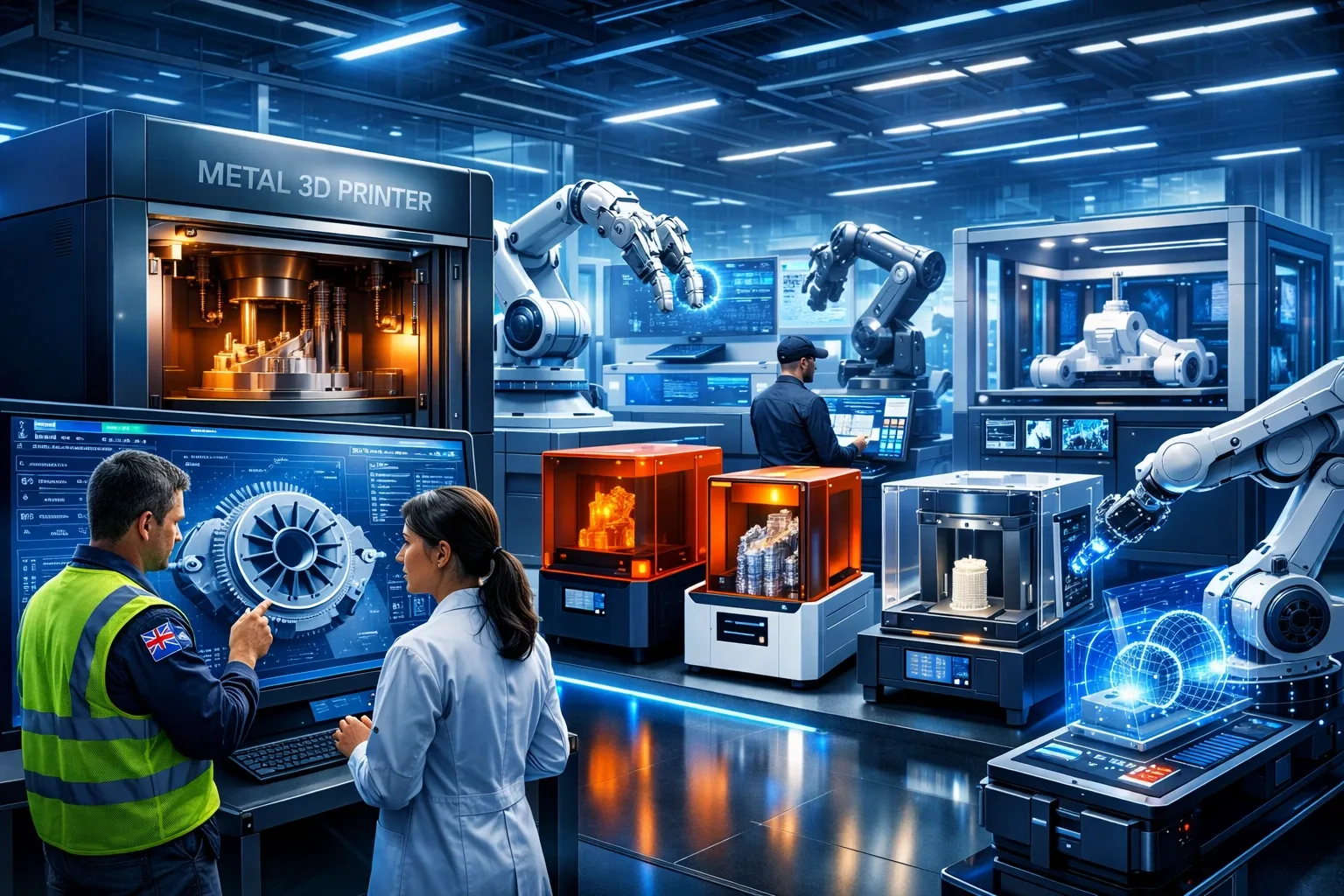
Manufacturers looking to implement additive manufacturing should follow a structured approach.
-
Understand manufacturing use cases
Identify components that benefit most from additive manufacturing. -
Choose the right technology
Different technologies serve different production needs. -
Select engineering-grade materials
Material choice directly affects performance and durability. -
Work with an experienced industrial partner
A partner with expertise in industrial additive manufacturing workflows can significantly accelerate adoption.
This structured process improves manufacturing readiness and ensures successful implementation.
Case Studies: Real Manufacturing Results Using 3D Printing
Real-world manufacturing examples demonstrate the impact of additive manufacturing.
Mining Equipment Manufacturer
A mining company used additive manufacturing to produce replacement components. The result was a 40% reduction in tooling costs and faster spare part availability.
Automotive Supplier
An automotive parts supplier used 3D printing for rapid prototyping, reducing product development time and enabling faster engineering validation.
Product Startup
A startup developed functional prototypes and transitioned to production-ready parts using nylon SLS printing, enabling faster product launch.
These examples highlight the role of additive manufacturing in manufacturing optimisation and innovation.
The Future of Additive Manufacturing in Australia
The future of additive manufacturing in Australia looks extremely promising. Several emerging technologies will drive further growth.
Key trends include:
-
AI-driven manufacturing optimization
-
Distributed manufacturing networks
-
Digital inventory systems
-
Automation integration
These innovations will strengthen advanced manufacturing technology and accelerate the future of manufacturing Australia.
As more industries adopt additive manufacturing, the technology will become an essential part of modern production ecosystems.
FAQs
1. What is the future of 3D printing in Australia?
The future of printing in Australia depends on the growth of advanced manufacturing technologies. 3D printing is being used more in industries like mining, aerospace, medical manufacturing, automotive, and construction.
As 3D printing technology gets better and more materials become available 3D printing in Australia will be used more for making working models, tools, spare parts and parts that're ready to use. This change helps manufacturers to save money on tools, make products faster, and make their supply chains stronger. 3D printing in Australia will play a role in this change. Manufacturers in Australia will use 3D printing more. It will help them to make things quickly and cheaply. The use of printing will increase in Australia.
2. How are 3D printing services in Australia used by manufacturers?
Manufacturers use 3D printing services in Australia for several industrial applications including rapid prototyping, custom component manufacturing, jigs and fixtures, tooling, and low-volume production. Industrial additive manufacturing allows companies to produce complex parts without expensive moulds or long overseas lead times. This flexibility makes 3D printing particularly valuable for product development, spare part manufacturing, and bridge production.
3. Why is additive manufacturing growing in Australia?
Additive manufacturing in Australia is getting bigger. This is because the cost of making tools is going up, and there are problems with getting things from countries. Companies in Australia need to come up with ideas faster. They want to make things in a way that's flexible and does not rely too much on other countries.
3D printing helps Australian companies make things when they need them. It also helps them keep track of their products using computers. This means Australian companies can make parts in their country. They can still make changes to the design of their products. Keep costs low. Additive manufacturing in Australia is really helpful, for this reason.
4. What industries benefit most from industrial 3D printing in Australia?
Industrial 3D printing in Australia is widely used across several sectors including mining, automotive, aerospace, medical device manufacturing, construction, and industrial machinery. These industries rely on additive manufacturing for producing custom machine parts, functional prototypes, production tools, spare components, and specialised equipment with high precision and strong mechanical performance.
5. Is 3D printing suitable for production manufacturing in Australia?
Yes, modern industrial 3D printing technologies such as SLS nylon printing, metal 3D printing, and high-performance FDM manufacturing can produce production-ready parts. Engineering-grade materials like nylon, carbon fibre reinforced polymers, and metal powders provide the strength and durability needed for real industrial applications. Many manufacturers now use additive manufacturing for low-volume production, bridge manufacturing, and specialised components.
6. How does industrial 3D printing reduce manufacturing costs?
Industrial 3D printing reduces manufacturing costs by eliminating the need for expensive tooling such as injection moulds and custom machining fixtures. Manufacturers can produce parts directly from digital designs, which lowers setup costs and enables efficient low-volume manufacturing. It also reduces material waste and shortens production lead times, making it a cost-effective solution for complex and custom components.
7. What are the most common 3D printing technologies used in Australia?
The most widely used additive manufacturing technologies in Australia include:
-
FDM (Fused Deposition Modelling) for functional prototypes, jigs, and fixtures
-
SLA (Stereolithography) for high-detail precision parts and validation models
-
SLS (Selective Laser Sintering) for strong nylon production components
-
Metal 3D printing for industrial and high-temperature applications
These technologies allow manufacturers to select the most suitable method based on part performance, material strength, and production requirements.
Sources & References
Market Research & Industry Reports
-
IMARC Group.
Australia 3D Printing Market: Industry Trends, Share, Size, Growth, Opportunity and Forecast.
Available at: https://www.imarcgroup.com/australia-3d-printing-market -
IMARC Group.
-
Expert Market Research.
Australia 3D Printing Market Size, Share, Growth and Forecast.
Industry Insights & Global Manufacturing Trends
-
Wohlers Associates.
Wohlers Report: Additive Manufacturing and 3D Printing State of the Industry.
Available at: https://www.wohlersassociates.com -
World Economic Forum – Klaus Schwab.
The Fourth Industrial Revolution and Advanced Manufacturing Technologies.
Available at: https://www.weforum.org -
ISO – International Organization for Standardization.
Additive Manufacturing Standards and Industrial Applications.
Available at: https://www.iso.org
Conclusion
Additive manufacturing is no longer an emerging concept in Australia’s industrial sector, it is rapidly becoming a foundational manufacturing technology. As global competition intensifies and supply chains become more unpredictable, manufacturers need production methods that are faster, more flexible, and more resilient. Industrial 3D printing provides exactly that.
By eliminating expensive tooling, enabling rapid product development, and allowing on-demand production of complex components, additive manufacturing is fundamentally changing how products are designed, tested, and manufactured. Instead of waiting weeks for overseas suppliers or committing to large minimum order quantities, manufacturers can now produce functional parts locally, optimise designs quickly, and move from concept to production with far greater speed and efficiency.
Across industries such as mining, automotive, medical manufacturing, construction, and advanced engineering, companies are increasingly integrating industrial 3D printing into their production workflows. This shift is strengthening Australia’s manufacturing ecosystem by reducing reliance on global supply chains and enabling local innovation.
However, adopting additive manufacturing successfully requires more than access to machines. It requires engineering expertise, material knowledge, and a manufacturing partner capable of delivering production-ready results.
With more than 15 years of experience in industrial 3D printing services, particularly supporting manufacturers in Melbourne and across Australia, Forge Labs provides the engineering-led support that modern manufacturers need. From design optimisation and rapid prototyping to low-volume production and batch manufacturing, Forge Labs helps businesses turn innovative ideas into reliable, high-performance components.
If you are a manufacturer who wants to add manufacturing to what you do Forge Labs can help you with that. They have the know-how, the technology and the ability to make things so you can feel good about moving. If you are a business in Australia and you want to learn about 3D printing services, you can ask Forge Labs for advice on making things or get a price quote right away. This is the step, to making your manufacturing better and stronger.